
When Strong People Carry the System
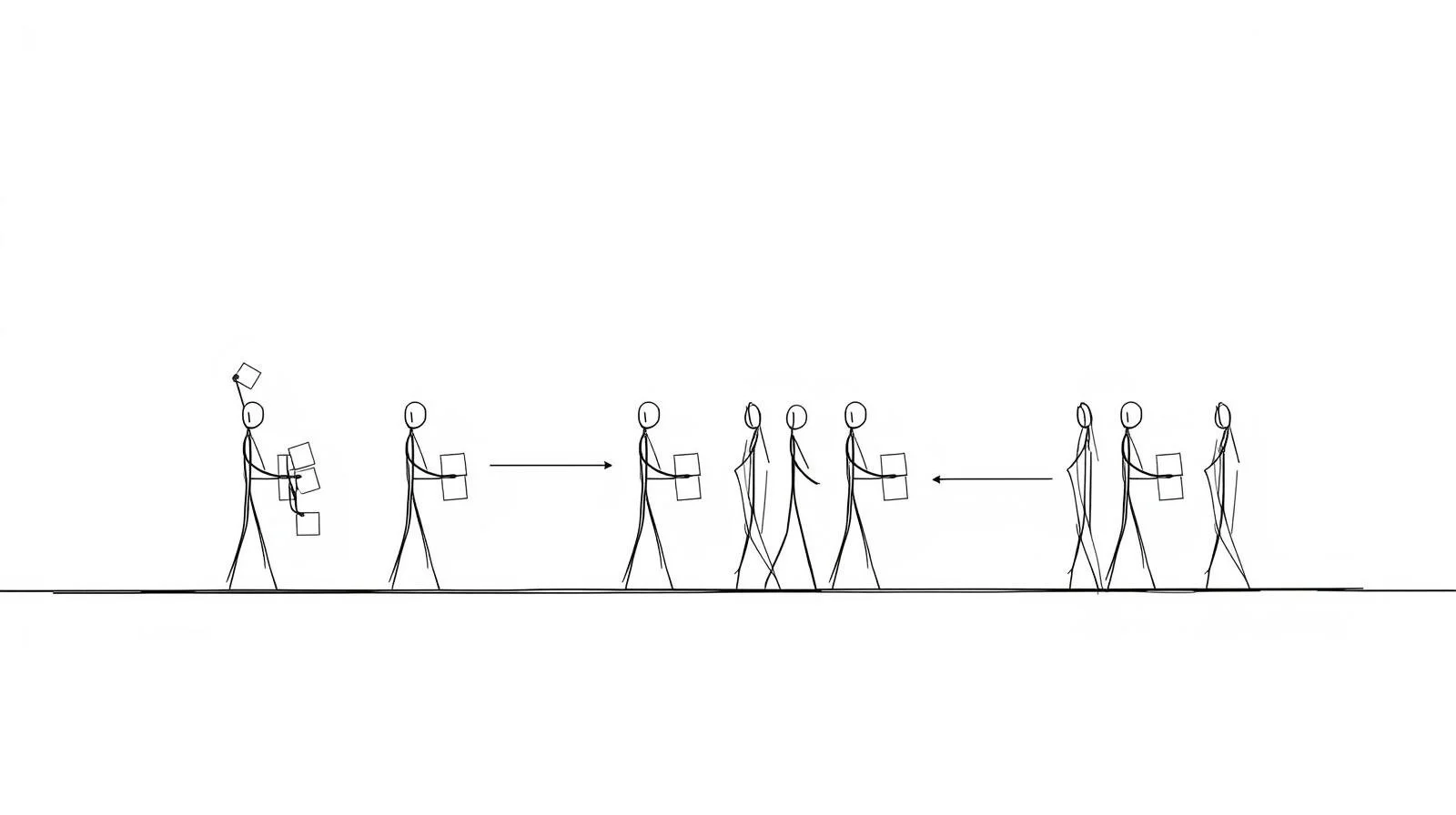
In some organizations, pressure does not immediately create visible strain.
Work continues.
Problems are addressed.
The system appears to adapt.
But the adaptation does not come from structure.
It comes from people.
Strong operators step in.
They take on additional responsibility.
They smooth tension between teams.
They translate unclear decisions into action.
From the inside, this often looks like commitment.
People care.
They step up. They do what is needed to keep things moving.
From the outside, it can look like a healthy, high-performing team.
But over time, a different pattern begins to form.
The system is no longer carrying pressure on its own.
People are carrying it instead.
When pressure has nowhere to land structurally, it is absorbed relationally.
Tension is managed in conversations instead of clarified in decisions.
Gaps are filled through effort instead of resolved through structure.
Work continues, but the underlying conditions remain unchanged.
Because this compensation is quiet, it is often difficult to detect.
There are no immediate failures.
No clear breakdowns.
No single point of concern.
Instead, the signals are subtle.
Strong people begin to feel the weight.
Energy is spent maintaining stability rather than improving the system.
The same patterns require repeated effort to manage.
Over time, the system adapts to this arrangement.
It begins to rely on the people who compensate most effectively.
Not because they were asked to, but because they can.
This creates a quiet dependency.
The system continues to function, but its ability to carry pressure structurally does not develop.
And the people holding it are rarely visible in the design of the system itself.
From the inside, this can be misinterpreted as a capacity issue.
A need for more people.
More effort.
More resilience.
Often, it is structural.
When people carry what structure should hold, the system loses the opportunity to evolve.
The work continues, but the conditions that produce the work remain unchanged.
Over time, this limits not only sustainability, but learning.
Because the system is being stabilized through human effort, it cannot fully see where structure is needed.
Restoring balance does not begin by asking people to carry less.
It begins by observing what they are already carrying.
Where tension is being smoothed.
Where decisions are being translated.
Where effort is compensating for missing structure.
From there, structure can begin to take on what people have been holding.
And the system can start to carry its own weight.
— Balcony Notes on Organizational Gravity
Audrey Wyatt